
Wednesday, October 2, 2013


Thursday, August 22, 2013
The Elderberry
From warding off evil to tapping maple trees, the
elderberry bush lives up to its name dating back to prehistoric man1. But don’t eat the
berries raw; they are poisonous. This
native shrub fascinates for its many elixir, practical, and folk uses. Black Elderberries have almost 5
times as many anthocyanins as Blueberries and twice the overall antioxidant
capability of cranberries. And Black
Elderberry has been found to be effective against the H5N1 strain of Avian Flu;
and when given to patients, scientists have found the Black Elderberry, has the
ability to ward off flu infections quickly.1
Take a closer look at the at the
black-berried elder, Sambucus
nigra:
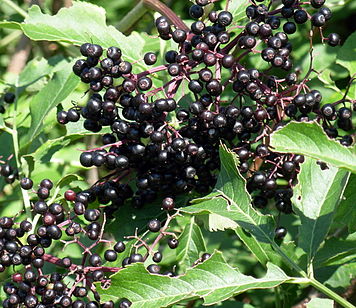

“Food
The
flowers of Sambucus
nigra are used to produce elderflower cordial.
The
French, Austrians and Central Europeans produce elderflower syrup, commonly
made from an extract of elderflower blossoms, which is added to Palatschinken
filling instead of blueberries.
People
throughout much of Central, Eastern, and Southeastern Europe use a similar
method to make a syrup which is diluted with water and used as a drink. Based
on this syrup, Fanta
markets a soft drink variety called "Shokata"
which is sold in 15 countries worldwide.
In
the United States, this French elderflower syrup is used to make elderflower marshmallows.
St. Germain, a French liqueur, is made
from elderflowers. Hallands Fläder, a Swedish akvavit,
is flavoured with elderflowers.
The
Italian liqueur Sambuca
is flavoured with oil obtained from the elderflower.
Fruit
pies and relishes are produced with berries. In Italy (especially in Piedmont)
and Germany, the umbels
of the elderberry are batter coated, fried and then served as a dessert or a
sweet lunch with a sugar and cinnamon topping.
In
Romania, a slightly fermented soft beverage (called "socata" or
"suc de soc") is traditionally produced by letting the flowers
macerate, with water, yeast and lemon for 2-3 days. A similar drink is produced
in the UK, but in this case the last stage of fermentation is allowed to
proceed in a closed pressure proof bottle to give a fizzy drink called elderflower
champagne.
Cultivation
Ornamental
varieties of Sambucus are grown
in gardens for their showy flowers, fruits and lacy foliage.
Native
species of elderberry are often planted by people wishing to support native
butterfly and bird species.
Elderberries, raw
Sambucus spp. |
|
Nutritional value per 100 g (3.5 oz)
|
|
305 kJ (73 kcal)
|
|
18.4 g
|
|
7 g
|
|
0.5 g
|
|
0.66 g
|
|
79.80 g
|
|
Vitamin A
equiv.
|
30 μg (4%)
|
0.07 mg (6%)
|
|
0.06 mg (5%)
|
|
0.5 mg (3%)
|
|
Pantothenic
acid (B5)
|
0.14 mg (3%)
|
0.23 mg (18%)
|
|
Folate
(vit. B9)
|
6 μg (2%)
|
36 mg (43%)
|
|
38 mg (4%)
|
|
1.6 mg (12%)
|
|
5 mg (1%)
|
|
39 mg (6%)
|
|
280 mg (6%)
|
|
0.11 mg (1%)
|
|
Link to
USDA Database entry
Percentages are roughly approximated using US recommendations for adults. Source: USDA Nutrient Database |
|
Medicine
Black
elderberry has been used medicinally for hundreds of years.
Some
preliminary studies demonstrate that elderberry may have a measurable effect in
treating the flu, alleviating allergies, and boosting overall respiratory
health.
Elder
is used in Traditional Chinese Medicine, dissolved in wine, for rheumatism and
traumatic injury.
Music
Branches
from the elder are also used to make the fujara,
koncovka and other uniquely
Slovakian flutes. Similar musical instruments (furulya) are made of elderberry (fekete bodza, Sambucus
nigra) in Hungary and other parts of Eastern Europe.
Toxicity
The
ripe, cooked berries (pulp and skin) of most species of Sambucus are edible. However, most uncooked berries and other
parts of plants from this genus are poisonous. Sambucus nigra is the only variety
considered to be non-toxic, but it is still recommended that its berries be
cooked slightly for culinary purposes. The leaves, twigs, branches, seeds and roots of Sambucus plants can contain a cyanide-inducing glycoside (a glycoside
which gives rise to cyanide as the metabolism
processes it). Ingesting a sufficient quantity of cyanide-inducing glycosides can cause a toxic build up of
cyanide in the body.
In
1984, a group of twenty-five people were sickened, apparently by elderberry
juice pressed from fresh, uncooked Sambucus
mexicana berries. All recovered quickly, however, including
one individual who was hospitalized after drinking five glasses.
Such reported incidents are rare.
Ecology
The
berries are a very valuable food resource for many birds. In Northern
California elderberries are a favorite food for migrating Band-tailed Pigeons. Flocks can strip an entire
bush in less than an hour. Elders are used as food plants by the larvae of some Lepidoptera
species including Brown-tail, Buff Ermine, Dot Moth,
Emperor Moth,
the Engrailed,
Swallow-tailed Moth and the V-pug. The crushed foliage
and immature fruit have a strong fetid smell.
Dead
elder wood is the preferred habitat of the mushroom Auricularia auricula-judae, also
known as "Judas' ear fungus".
The
pith of elder has been
used by watchmakers
for cleaning tools before intricate work.
Folklore
Folklore
is extensive and can be wildly conflicting depending on region.
- In some areas, the "elder tree" was supposed to ward off evil influence and give protection from witches, while other beliefs say that witches often congregate under the plant, especially when it is full of fruit.
- In some regions, superstition, religious belief, or tradition prohibits the cutting of certain trees for bonfires, most notably in witchcraft customs the elderberry tree; "Elder be ye Lady's tree, burn it not or cursed ye'll be" – A rhyme from the Wiccan rede.
- If an elder tree was cut down, a spirit known as the Elder Mother would be released and take her revenge. The tree could only safely be cut while chanting a rhyme to the Elder Mother.”2
Sources: 1 http://www.blackelderberry.info/
, 2 http://en.wikipedia.org/wiki/Sambucus
Tuesday, June 4, 2013
Lovin' Slow Food UNH!
 Catching up with Slow Food UNH is harder
than it sounds! They are still
SLOOOOOWWW…, but don’t let that fool you. The group gathered weekly during the Spring semester to share meals,
cook with local ingredients, and host a variety of events including a viewing
of the “Changing the Way We Eat” conference, collecting and raising money for the Earth Day Food Basket program,
screening of “Forks over Knives”, and offering a pasta making workshop.
Catching up with Slow Food UNH is harder
than it sounds! They are still
SLOOOOOWWW…, but don’t let that fool you. The group gathered weekly during the Spring semester to share meals,
cook with local ingredients, and host a variety of events including a viewing
of the “Changing the Way We Eat” conference, collecting and raising money for the Earth Day Food Basket program,
screening of “Forks over Knives”, and offering a pasta making workshop. 
 The group didn’t just sit in their club
house either! That’s not the mission of
Slow Food UNH. They linked arms with
Cornucopia Food Pantry, pot lucked with UNH Organic Garden Club, and attended
the UNH Solarfest. At the New England
Regional Slow Food Conference they joined the big family with Slow Food Seacoast, Slow
Food Martha's Vineyard, Slow Food UVM,
Slow Food Vermont, Slow Food Monadnock, and Slow Food Boston.
The group didn’t just sit in their club
house either! That’s not the mission of
Slow Food UNH. They linked arms with
Cornucopia Food Pantry, pot lucked with UNH Organic Garden Club, and attended
the UNH Solarfest. At the New England
Regional Slow Food Conference they joined the big family with Slow Food Seacoast, Slow
Food Martha's Vineyard, Slow Food UVM,
Slow Food Vermont, Slow Food Monadnock, and Slow Food Boston.  Slow Food UNH visited
sugarmomma’s maple farm during maple sugar weekend and spent a weekend
at Martha’s Vineyard nettle foraging and volunteering for the Island Grown Schools initiative (the island's own
'Farm to School' program).
Slow Food UNH visited
sugarmomma’s maple farm during maple sugar weekend and spent a weekend
at Martha’s Vineyard nettle foraging and volunteering for the Island Grown Schools initiative (the island's own
'Farm to School' program).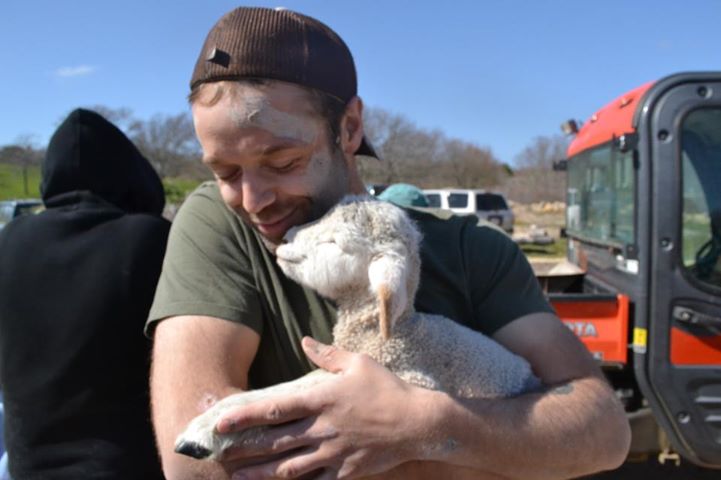 As if that wasn’t enough, Spencer
C. Montgomery, Slow Food UNH president, was awarded a FULL SCHOLARSHIP from Slow Food USA to fly down to New Orleans for the
National Slow Food Leadership Conference!!
This trip led to Spencer’s appointment as the National Coordinator of Slow Food Youth
Network in the USA. The plan is to build
a campus guide for slow food for other chapters and a regional model.
As if that wasn’t enough, Spencer
C. Montgomery, Slow Food UNH president, was awarded a FULL SCHOLARSHIP from Slow Food USA to fly down to New Orleans for the
National Slow Food Leadership Conference!!
This trip led to Spencer’s appointment as the National Coordinator of Slow Food Youth
Network in the USA. The plan is to build
a campus guide for slow food for other chapters and a regional model.
Looking forward the group plans to build the on-campus model for Slow
Fish USA this fall. Where better to plant the roots for Slow Fish USA than beautiful Seacoast New England!?!
The Slow Food Youth Network SFYN
and Slow Food UNH will need support from passionate individuals. So
catch Slow Food UNH this fall and don’t miss out!
You can view the movie inspired
by Spencer C. Montgomery and Slow Food at the University of New Hampshire. "For
the Love of it" illustrates the Slow Food process; from the
procurement of fresh local ingredients, to the culinary processing of them, and
ending with the enjoyment of the meal with loved ones. Slow Food is the very essence of food
culture.

Wednesday, April 17, 2013
Visit EcoGastronomy at the URC!
Friday, April 26, 2013, PAUL, Room G25, 10 - 11:30 a.m.
EcoGastronomy Dual Major Capstone Research Projects
EcoGastronomy Dual Major graduates explore the interdisciplinary nature of their degrees in their capstone research and synthesize their EcoGastronomy experience with their undergraduate education.
Moderator and Faculty Adviser: Daniel Winans
 Gabrielle
Durante Pollinator Gardening For The Urban Farmer
Gabrielle
Durante Pollinator Gardening For The Urban Farmer
 Kelly
Simpson Back to Basics: Catering Fresh, Local and Healthy
Meals for Families
on
the Go
Kelly
Simpson Back to Basics: Catering Fresh, Local and Healthy
Meals for Families
on
the Go
EcoGastronomy Dual Major Capstone Research Projects
EcoGastronomy Dual Major graduates explore the interdisciplinary nature of their degrees in their capstone research and synthesize their EcoGastronomy experience with their undergraduate education.
Moderator and Faculty Adviser: Daniel Winans
Maggie Baldwin Adaptation of Crops to Climate Change in Western
Africa and Latin America
Kate
Cameron Cafe Synesthesia
Emily
Cooper Growing
Smarter:
Sustainable Food & Living After School Program
Lauren
Cotnoir A Study
of Milk as an Essential Food Group
Lydia
Crisp Connecting Farms to Local Businesses: An
Analysis of Local Food Distribution
and Challenges in Southern New Hampshire
 Gabrielle
Durante Pollinator Gardening For The Urban Farmer
Gabrielle
Durante Pollinator Gardening For The Urban Farmer
Kathleen
Ernsting Exploring
Event
Planning: How to Utilize
Local Resources
and Overcome Challenges to
Remain a Sustainable Food Business in
New England
Kelly
Giller Value
Added
Products In New England Dairy Farms
Micayla Gilligan
The Local Tomato: A Sustainably
Delicious Food Trolley on UNH Campus
&
Kim Mayo
Carrie
Anne Harmon The Knoble Rot;
Business Proposal for Wine Store and Tapas Bar
Hannah
Hoban The
Edible
Green: An Edible Landscape for New
England Country Clubs
Erin
Jackson Dry Technology Business Plan:
Revolutionizing the Textiles Market
Jen
Lane & A Proposal
to Implement Field Experience and Experimental Learning to the
Maura
McCartney EcoGastronomy
Capstone
Class
Scarlett
Moberly Keep Growing: Mapping the North
Country's Food System
Gina
Puorro Introduction to
Culinary Nutrition: Designing an Introductory Course on Nutrition, Cooking, and Local Food
Systems.
Liz
Puris & The Farm Studio: An Intimate Look at
Sustainable Agriculture in New
Geraldine
Walker Hampshire
Rebecca
Rothman The Role
of Food and Beverage Managers in Ensuring a Sustainable Future
Sara
Schmidt Breaking Down
American Breakfast: The Evolution of the Tradition
 Kelly
Simpson Back to Basics: Catering Fresh, Local and Healthy
Meals for Families
on
the Go
Kelly
Simpson Back to Basics: Catering Fresh, Local and Healthy
Meals for Families
on
the Go
Stephanie
Terenzio Having
a
Ball: A Guide
to Home Food Production
and Preservation
Michelle
Wong Sea
to
Table: Exploring Aquaculture in Tanzania
Subscribe to:
Posts (Atom)